Session organized by the UN Working Group on Business and Human Rights in collaboration with the Polish Institute for Human Rights and Business (PIHRB)
Webcast of the session: Meeting link Meeting number: 840 368 810 Password: 7KAXPwtJ
This session will be chaired by Elżbieta Karska, chairperson of the UN Working Group on Business and Human Rights.
Brief Description: This Forum session is part of the Forum track on trends and challenges in promoting business respect for human rights in the context of each region of the world. Building on the sessions on government action on the Forum’s first day, the region focused discussions aim to take a closer look at how to overcome key business-related human rights challenges faced in Eastern European countries and lessons learned from emerging government, business and civil society initiatives.
Objectives of the session: The session will address initiatives to implement the UN Guiding Principles (UNGPs) and will explore challenges and lessons learned on how States and businesses are discharging their respective duties and responsibilities across the three pillars of the “Protect, Respect and Remedy” Framework of the UNGPs. This include initiatives taken by the State to protect against business-related human rights abuses, particularly in its role as an economic actor. Discussions will also address how businesses identify, prevent, mitigate and account for the negative human rights impacts they may cause, including through lessons learned from human rights due diligence across large supply chains. The session will also address the role of investors in taking meaningful action to use their leverage to encourage companies and governments to respect and protect human rights in line with the UNGPs. Access to an effective remedy, especially for individual and groups at heightened risk of abuses, including human rights defenders, women and girls, workers in low-wage sectors and migrant workers will also be discussed. Drawing from the experience of those countries in the region that have developed a national action plan on business and human rights and of those in the process of developing one, the session will also provide opportunity platform to discuss lessons learned and innovations from these initiatives, as well as from inter-State cooperation and peer-learning efforts.
Format of the session: The proposed session will be done in a talk show format with the participants having the opportunity to raise questions amongst each other as in a public dialogue. The session will be chaired by Ms Elżbieta Karska, Chair of the UN Working Group. Representatives from different stakeholders will kick start the conversation by delivering brief presentations about the various emerging and ongoing activities to implement the UNGPs in different countries of the region. Presentations will be followed by Q&A.
Tentative agenda The session will be opened by short introductory remarks by Ms. Elżbieta Karska, Chair of the UN Working Group and organized in three panel discussions, which will include brief presentations by panellists followed by Q&A segments. All panel discussions will focus on concrete examples, challenges, innovations and lessons learned regarding the implementation of the UNGPs in the region.
Composition of the panels:
1. Perspectives from the civil society and academia: (40 minutes)
Ms Beata Faracik, Co-Founder & President of the Board of the Polish Institute for Human Rights and Business (Poland)
Ms Ani Khachatryan, Seize Armenian Environmental Front (Armenia)
Moderator: Mr. Jernej Černič, Associate Professor of Constitutional and Human Rights Law, New University, Ljubljana, Slovenia
2. Perspectives from the governments: (40 minutes)
Ms. Urška Čas, Directorate for Multilateral Relations, Development Cooperation and International Law, Slovenia
Second government representative TBC
Moderator: Ms Olena Uvarova, PhD, Head of the International Lab on Business and Human Rights Yaroslav Mudryi National Law University, Ukraine
3. Perspectives from business: (40 minutes)
Ms. Tatyana Derivedmid, Sakhalin Energy, Russia
Ms. Anna Miazga, Sustainability Expert, LPP S.A., Poland
Moderator: Ms Lucie Mádlová Founder and Executive Director of the Association of Social Responsibility and Chairwoman of Steering Committee of the Global Compact Network (Czech Republic)
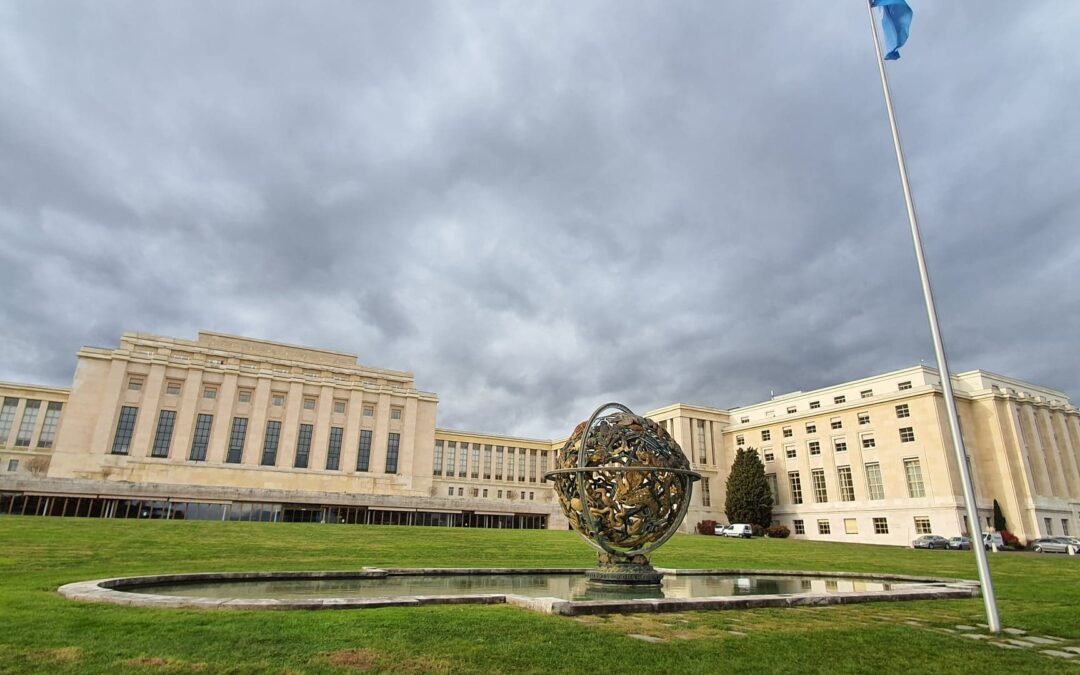
Panel dedykowany perspektywie społeczeństwa obywatelskiego, w którym głos zabrała Beata Faracik, prezeska PIHRB. Siedziba ONZ w Genewie
Session organized by the UN Working Group on Business and Human Rights in collaboration with the Polish Institute for Human Rights and Business (PIHRB)
Webcast of the session: Meeting link Meeting number: 840 368 810 Password: 7KAXPwtJ
This session will be chaired by Elżbieta Karska, chairperson of the UN Working Group on Business and Human Rights.
Brief Description: This Forum session is part of the Forum track on trends and challenges in promoting business respect for human rights in the context of each region of the world. Building on the sessions on government action on the Forum’s first day, the region focused discussions aim to take a closer look at how to overcome key business-related human rights challenges faced in Eastern European countries and lessons learned from emerging government, business and civil society initiatives.
Objectives of the session: The session will address initiatives to implement the UN Guiding Principles (UNGPs) and will explore challenges and lessons learned on how States and businesses are discharging their respective duties and responsibilities across the three pillars of the “Protect, Respect and Remedy” Framework of the UNGPs. This include initiatives taken by the State to protect against business-related human rights abuses, particularly in its role as an economic actor. Discussions will also address how businesses identify, prevent, mitigate and account for the negative human rights impacts they may cause, including through lessons learned from human rights due diligence across large supply chains. The session will also address the role of investors in taking meaningful action to use their leverage to encourage companies and governments to respect and protect human rights in line with the UNGPs. Access to an effective remedy, especially for individual and groups at heightened risk of abuses, including human rights defenders, women and girls, workers in low-wage sectors and migrant workers will also be discussed. Drawing from the experience of those countries in the region that have developed a national action plan on business and human rights and of those in the process of developing one, the session will also provide opportunity platform to discuss lessons learned and innovations from these initiatives, as well as from inter-State cooperation and peer-learning efforts.
Format of the session: The proposed session will be done in a talk show format with the participants having the opportunity to raise questions amongst each other as in a public dialogue. The session will be chaired by Ms Elżbieta Karska, Chair of the UN Working Group. Representatives from different stakeholders will kick start the conversation by delivering brief presentations about the various emerging and ongoing activities to implement the UNGPs in different countries of the region. Presentations will be followed by Q&A.
Tentative agenda The session will be opened by short introductory remarks by Ms. Elżbieta Karska, Chair of the UN Working Group and organized in three panel discussions, which will include brief presentations by panellists followed by Q&A segments. All panel discussions will focus on concrete examples, challenges, innovations and lessons learned regarding the implementation of the UNGPs in the region.
Composition of the panels:
1. Perspectives from the civil society and academia: (40 minutes)
Ms Beata Faracik, Co-Founder & President of the Board of the Polish Institute for Human Rights and Business (Poland)
Ms Ani Khachatryan, Seize Armenian Environmental Front (Armenia)
Moderator: Mr. Jernej Černič, Associate Professor of Constitutional and Human Rights Law, New University, Ljubljana, Slovenia
2. Perspectives from the governments: (40 minutes)
Ms. Urška Čas, Directorate for Multilateral Relations, Development Cooperation and International Law, Slovenia
Second government representative TBC
Moderator: Ms Olena Uvarova, PhD, Head of the International Lab on Business and Human Rights Yaroslav Mudryi National Law University, Ukraine
3. Perspectives from business: (40 minutes)
Ms. Tatyana Derivedmid, Sakhalin Energy, Russia
Ms. Anna Miazga, Sustainability Expert, LPP S.A., Poland
Moderator: Ms Lucie Mádlová Founder and Executive Director of the Association of Social Responsibility and Chairwoman of Steering Committee of the Global Compact Network (Czech Republic)
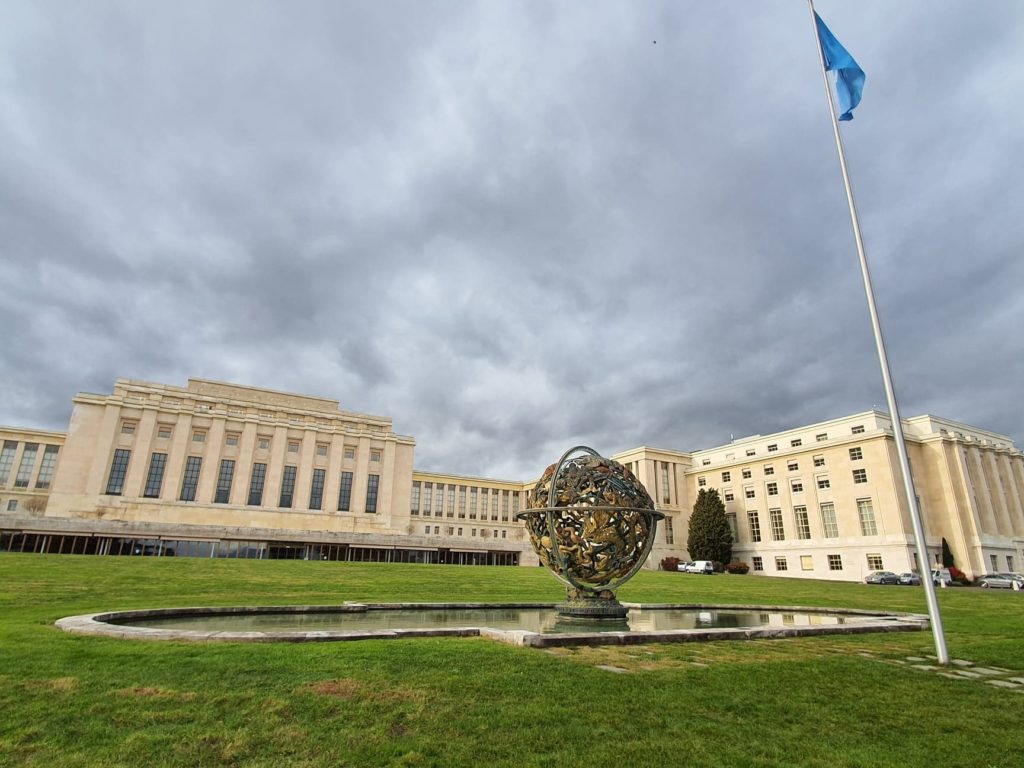
Panel dedykowany perspektywie społeczeństwa obywatelskiego, w którym głos zabrała Beata Faracik, prezeska PIHRB. Siedziba ONZ w Genewie
Gościnne wykłady ekspertów PIHRB na uczelniach nie są rzadkością. Jednak zaproszenie do grona wykładowców Master Course in Business and Human Rights na University of Bergen dwóch ekspertek naszego instytutu – dr hab. Joanny Unterschuetz oraz Beaty Faracik – traktujemy jako szczególne wyróżnienie.
Odbywający się w trzy weekendy między wrześniem a listopadem na Uniwersytecie w Bergen w Norwegii, coroczny kurs magisterski koncentruje się na powiązaniach między naruszeniami praw człowieka i działalnością korporacyjną, a także znaczenie międzynarodowych standardów dla wzmocnienia poszanowania i ochrony praw człowieka w kontekście biznesu. Szczególny nacisk jest położony na to co korporacyjne zasady należytej staranności w zakresie praw człowieka oznaczają dla firm.
Kurs prowadzony jest przez Wydział Polityki Porównawczej na Uniwersytecie w Bergen, norweską Fundację Rafto na rzecz Praw Człowieka oraz Instytut Praw Człowieka i Biznesu (Londyn). Jest skierowany dla studentów studiów magisterskich, specjalistów i wszystkich osób zainteresowanych biznesem i prawami człowieka. Wymagany tytuł licencjata lub równoważny oraz co najmniej dwuletnie doświadczenie zawodowe. Kurs pozwala na zdobycie 15 punktów ECTS.
2019 Kadra dydaktyczna
Kadra tegorocznego programu to wiodące postaci w dziedzinie biznesu i praw człowieka – od globalnych dyrektorów korporacyjnych i wybitnych naukowców po przedstawicieli globalnych organizacji pozarządowych i obrońców praw człowieka:
Anita Househam – Telenor
Asria Mohamed and Erik Hagen – Norwegian Support Committee for Western Sahara
Annabelle Lefébure-Henriksen – Fairtrade Norway
Beata Faracik – Polish Institute for Human Rights and Business
Camilla Rossaak – Norwegian Foreign Ministry
Dan Neale – Corporate Human Rights Benchmark
Elise Must – Hydro
Frank Mugisha – Rafto Laureate, Sexual Minorities in Uganda
Froydis Cameron – Anglo American Corp
Harpreet Kaur – UNDP
Joanna Unterschuetz – Polish Institute for Human Rights and Business
Kathryn Dovey – OECD
Malin Helgesen – Equinor
Marcela Manubens – Unilever Corp
Mark Taylor – University of Oslo
Maryam al-Khawaja – Rafto Laureate, Physicians for Human Rights, Denmark
Nnimmo Bassey – Rafto Laureate, Health of Mother Earth Foundation, Nigeria
Pia Rudolfsson Goyer – lawyer and independent expert
Reidun Blehr Lånkan – Ethical Trade Norway
Ron Popper – Global Business Initiative on Human Rights
Salil Tripathi – Institute for Human Rights and Business
Sanyu Awori – Business and Human Rights Resource Centre
Scott Jerbi – Institute for Human Rights and Business
W dniu dzisiejszym rozpoczęła działalność Sekcja ds. Praw Człowieka w Sporcie działająca w ramach Polskiego Instytutu Praw Człowieka i Biznesu. Celem sekcji jest promowanie zasad odpowiedzialnego biznesu w sektorze sportowym, poprzez m.in.:
– promowanie wśród przedsiębiorstw chcących inwestować w sport działania w sposób etyczny, transparentny i społecznie odpowiedzialny, oraz poszanowania praw wszystkich uczestników sektora;
– stymulowanie dialogu pomiędzy wszystkim interesariuszami rynku sportowego, tj.:
(i) związkami sportowymi i zrzeszonymi w nich klubami,
(ii) zawodnikami i trenerami oraz ich agentami,
(iii) sponsorami, agencjami marketingowymi i mediami oraz innymi inwestorami działającymi na rynku sportowym;
w celu m.in. wsparcia rozwiazywania sporów w sektorze i kształcenia etycznych i kompetentnych kadr do zarządzania sportem;
– zapewnienie wsparcia eksperckiego instytucjom państwowym zajmującym się egzekwowaniem prawa w sektorze sportowym (w tym Rzecznika Praw Obywatelskich, Państwową Inspekcję Pracy, Ministra Sportu i Turystyki, Ministra Finansów, Sejmową Komisję ds. Kultury Fizycznej, Sportu i Turystyki), oraz wypracowanie pozycji wiarygodnego partnera.
Sekcji Praw Człowieka w Sporcie przewodniczy adwokat Stanisław Drozd, pomysłodawca i inicjator powstania sekcji. Na co dzień związany z kancelarią Wardyński i Wspólnicy, gdzie zajmuje się m.in. rozwiązywaniem sporów gospodarczych i inwestycyjnych, a w szczególności arbitrażem międzynarodowym oraz doradza w zakresie prawa ochrony konkurencji, mec. Drozd specjalizuje się ponadto w prawie sportowym. Działa także na rzecz ochrony praw zawodowych sportowców oraz promocji praw człowieka i zasad dobrego zarządzania w sporcie. Współpracuje ze stowarzyszeniami zawodników, broniąc i zabiegając o poszanowanie praw profesjonalnych sportowców w postępowaniach sądowych i parlamentarnych oraz w ramach postępowań przed międzynarodowymi instytucjami zajmującymi się prawami człowieka.
On October 17th, 2019 an all-day multi-stakeholder consultation was co-organized by PIHRB and Shift. It formed part of the three-year Valuing Respect project* aimed at developing better ways to evaluate business respect for Human Rights and led by Shift – a global collaborative platform to research and co-create better ways of evaluating business respect for human rights.
The aim of the consultation gathering 32 experts from Central and Eastern Europe was to contribute to the development of new indicators, principles and tools to measure business respect for human rights – the essence of companies’ social performance.
In the first 18-months of the project the project team has engaged with hundreds of people from business, civil society, government and the investment community. Consultations were held in Europe, South-East Asia, Sub-Saharan Africa and North America. And, together with project’s three regional partners, including Polish Institute of Human Rights and Business, empirical research was conducted to identify the problems with how business currently measures corporate human rights performance.
As the project evolves consultations provide an opportunity to test with stakeholders some emerging propositions concerning new ways of thinking about evaluating companies’ human rights performance and draft indicators for:
a) evaluating a how far companies
embed respect for human rights into their
“leadership governance; and
b) supporting companies and their stakeholders focus on human rights risks inherent in business models.
c) New methods and management tools to support practitioners evaluate company how effective company efforts are in achieving better outcomes or people.
d) Initial ideas about the role of accounting in capturing value created from business respecting human rights.
* You can find updates about the project at www.valuing-respect.org. The project is generously funded by the Ministry of Foreign Affairs Finland, the Norwegian Ministry of Foreign Affairs, and Norges Bank Investment Management.
Dzisiaj rozpoczyna się na forum ONZ kolejna runda negocjacji dot. umowy międzynarodowej regulującej kwestie odpowiedzialności biznesu za poszanowanie praw człowieka i sankcji za ich naruszenie.
Ponieważ stanowisko Unii Europejskiej nie jest jednoznaczne, 57 organizacji społeczeństwa obywatelskiego – w tym Polski Instytut Praw Człowieka i Biznesu – opublikowało dzisiaj stanowisko skierowane do UE i jej państw członkowskich a wzywające do opowiedzenia się po stronie praw człowieka i konstruktywnego udziału w negocjacjach, tak aby wypracować uregulowania, dzięki którym możliwe będzie pociągnięcie do odpowiedzialności korporacji naruszających prawa człowieka.
#BindingTreaty to #StopCorporateAbuse @UNGeneva – 57 NGOs of the #TreatyAlliance call on you to speak up for #HumanRights and finally make corporations accountable for human rights violations.
Aby zapewnić jak najlepsze wrażenia, korzystamy z technologii, takich jak pliki cookie, do przechowywania i/lub uzyskiwania dostępu do informacji o urządzeniu. Zgoda na te technologie pozwoli nam przetwarzać dane, takie jak zachowanie podczas przeglądania lub unikalne identyfikatory na tej stronie. Brak wyrażenia zgody lub wycofanie zgody może niekorzystnie wpłynąć na niektóre cechy i funkcje.
Funkcjonalne
Zawsze aktywne
Przechowywanie lub dostęp do danych technicznych jest ściśle konieczny do uzasadnionego celu umożliwienia korzystania z konkretnej usługi wyraźnie żądanej przez subskrybenta lub użytkownika, lub wyłącznie w celu przeprowadzenia transmisji komunikatu przez sieć łączności elektronicznej.
Preferencje
Przechowywanie lub dostęp techniczny jest niezbędny do uzasadnionego celu przechowywania preferencji, o które nie prosi subskrybent lub użytkownik.
Statystyka
Przechowywanie techniczne lub dostęp, który jest używany wyłącznie do celów statystycznych.Przechowywanie techniczne lub dostęp, który jest używany wyłącznie do anonimowych celów statystycznych. Bez wezwania do sądu, dobrowolnego podporządkowania się dostawcy usług internetowych lub dodatkowych zapisów od strony trzeciej, informacje przechowywane lub pobierane wyłącznie w tym celu zwykle nie mogą być wykorzystywane do identyfikacji użytkownika.
Marketing
Przechowywanie lub dostęp techniczny jest wymagany do tworzenia profili użytkowników w celu wysyłania reklam lub śledzenia użytkownika na stronie internetowej lub na kilku stronach internetowych w podobnych celach marketingowych.