
utworzone przez Beata Faracik | cze 3, 2024 | News, Szkolenia i wydarzenia, Wystąpienia eksperckie
W miniony weekend, 2 czerwca 2024 r., zakończyła się pierwsza 'eksperymentalna’ edycja kursu podyplomowego „Biznes i prawa człowieka” zorganizowanego przez Centrum Praw Człowieka Collegium Civitas, którego partnerem – także współkształtującym założenia merytoryczne programu – był Polski Instytut Praw Człowieka i Biznesu. Kilkanaście osób reprezentujących firmy z różnych sektorów, administracji publicznej a także NGOs pozyskało wiedzę i umiejętności, które pomogą im w zapewnieniu poszanowania praw człowieka przez ich organizacje w codziennej działalności przedsiębiorstw. Choć Wytyczne ONZ dotyczące biznesu i praw człowieka od 2011 r. wyjaśniają na czym polega odpowiedzialność przedsiębiorstw za poszanowanie praw człowieka, był to pierwszy kurs podpyplomowy zorganizowany na uczelni wyższej w pełni poświęcony tej problematyce. Gratulacje i podziękowania należą się kierowniczce i pomysłodawczyni kursu, dr Jacqueline Kacprzak z Centrum Praw Człowieka Collegium Civitas, za wytrwałość i doprowadzenie do uruchomienia kursu.
Rosnące oczekiwania społeczne, a także nowe regulacje UE stawiają wobec biznesu nowe wymagania, również w zakresie poszanowania praw człowieka. Dlatego celem kursu było m.in. wyposażenie ekspertów i managerów ESG/CSR, działów compliance, a także członków zarządów w specjalistyczną wiedzę z zakresu praw człowieka oraz umiejętności, które pozwolą im ocenić ryzyka w zakresie praw człowieka w prowadzonej przez ich przedsiębiorstwa działalności i wpływ ich działalności na ludzi, oraz wdrożyć odpowiednie procedury należytej staranności. W szczególności, celem kursu było wsparcie słuchaczy w zrozumieniu praw człowieka w kontekście standardów odpowiedzialnego biznesu, wymagań z obszaru ESG i w kontekście wdrażania należytej staranności w obszarze praw człowieka.
Program kursu obejmował 71 godzin dydaktycznych realizowanych w trakcie czterech zjazdów w trybie stacjonarnym, z kilkoma wykładami w języku angielskim w trybie online prowadzonych przez wykładowców zagranicznych, m.in. wykładowców i praktyków z Global Business Initiative for Human Rights, Levin Sources, University of Glasgow, Zurich University. Wśród wykładowców było także grono ekspertów PIHRB: Beata Faracik, Bartosz Kwiatkowski, Joanna Szymonek i Joanna Unterschuetz.
Ramowy program kursu obejmował:
- Wprowadzenie do tematu poszanowanie praw człowieka w działalności biznesowej obejmować będzie dwa wykłady, z których uczestnicy kursu dowiedzą się o międzynarodowej perspektywie poszanowania praw człowieka w standardach odpowiedzialnego biznesu oraz o rozwoju subdyscypliny socjologicznej jaką jest socjologia praw człowieka.
- Międzynarodowy system ochrony praw człowieka
W ramach tej części kursu uczestnicy zapoznają się z międzynarodowym systemem ochrony praw człowieka funkcjonującym w ramach ONZ, Rady Europy i Unii Europejskiej. Jak również dowiedzą się o konwencjach chroniących prawa pracownicze w ramach Międzynarodowej Organizacji Pracy. Przeanalizują konkretne przypadki naruszeń praw człowieka badane przez Krajowe Punkty Kontaktowe OECD ds. odpowiedzialnego biznesu. Poznają szczegółowy katalog praw człowieka.
- Należyta staranność w zakresie praw człowieka – czym jest proces należytej staranności w zakresie praw człowieka, jak przeprowadzać analizę wpływu i analizę ryzyka naruszenia praw człowieka w działalności przedsiębiorstw. Jak komunikować działania przedsiębiorstwa związane z należytą starannością?
- Przegląd wybranych praw człowieka, w tym m.in. wolność słowa w środowisku pracy, prawo do prywatności, praca przymusowa, praca dzieci, wolność zrzeszania się, prawa związkowe oraz prawo człowieka do życia w czystym, zdrowym i będącym w stanie równowagi środowisku. Także dyskryminacja w miejscu pracy.
- Prawa człowieka i nowe technologie w praktyce biznesowej – gwałtowny rozwój nowych technologii w ostatnich latach (sztuczna inteligencja, block chain, techniki rozpoznawania twarzy i wiele innych) może mieć wpływ na poszanowanie praw człowieka.
- Dostęp do środków zaradczych w sytuacjach naruszeń praw człowieka – jakie działania mogą wdrożyć przedsiębiorstwa w sytuacji naruszenia praw człowieka? Jakie są możliwe środki zaradcze?
- Procedury należytej staranności w zakresie praw człowieka w sytuacjach konfliktów zbrojnych. Wybuch wojny w Ukrainie w lutym 2022 r. wyraźnie ujawnił powstające w sytuacjach konfliktów zbrojnych trudności związane z poszanowaniem praw człowieka w działalności przedsiębiorstw w warunkach wojennych. Sankcje, bojkoty konsumenckie i in.
- Raportowanie kwestii dotyczących praw człowieka w standardach raportowania niefinansowego (ESRS i GRI). Zagadnienia poszanowania praw człowieka są elementem obowiązkowej sprawozdawczości przedsiębiorstw wynikającej z dyrektywy ws. sprawozdawczości przedsiębiorstw w zakresie zrównoważonego rozwoju (dyrektywa CSRD).
Kolejny kurs już jesienią! Więcej informacji już wkrótce!

utworzone przez Beata Faracik | kwi 30, 2024 | Konsultacje, News, Uncategorized, Wystąpienia eksperckie
 W dniach 29-30 kwietnia 2024 r., ekspertka i prezeska PIHRB, Beata Faracik wzięła udział na zaproszenie organizatorów w zamkniętym seminarium eksperckim „Screening for Sustainability Expert Workshop” zorgnizowanym przez Uniwersytet w Lund (Szwecja). Jej wystąpienie w sesji pt. „Looking Forward: What Next for the European Green Deal and Sustainability Screening?” w czasie której przedstawiono przegląd kontekstu i implikacji rozporządzenia taksonomicznego i powiązanych zmian regulacyjnych, było skupione na roli Wytycznych OECD w tym kontekście oraz szansach i wyzwaniach związanych z wdrażaniem norm biznesowych i praw człowieka na szczeblu krajowym, w szczególności podkreślając fakt braku świadomości i wiedzy po stronie podmiotów krytycznych dla praktycznej implementacji zmian – tj. przedstawicieli biznesu oraz administracji publicznej, bo będzie mieć krytyczny wpływ na jakość transpozycji regulacji z obszaru Zielonego Ładu. Zwróciła także uwagę na rolę jaką mogą pełnić organizacje pozarządowe – zarówno w obszarze edukacji jak i wsparcia biznesu w zrozumieniu jak poszanowanie praw człowieka przejawia się w ich codziennej działalności.
W panelu głos zabrali także prof. Gamze Erdem Türkelli, której wystąpienie skupiło się na Climate Finance for Just Transitions (CLiFT) i kluczowych aspektach zarządzania w przyszłości, Urban Funered który omówił w jaki sposób stowarzyszenia takie jak Swedish Securities Markets Association angażują się w zrównoważone finanse oraz Francesca Mussi, która skoncentrowała się na wpływie unijnego prawodawstwa dotyczącego praw człowieka i należytej staranności środowiskowej na ochronę środowiska w krajach LDC Afryki.
Program seminarium

utworzone przez Beata Faracik | kwi 24, 2024 | News, Publikacje, Wystąpienia eksperckie
Beata Faracik, prezeska i ekspertka PIHRB, była w dniu 24 kwietnia br. gościnią autorskiego podcastu CO Z TĄ MODĄ prowadzonego przez Rafała Reif, o przyszłości i odpowiedzialności branży mody. W podcaście tym porusza on problematykę zrównoważonej mody, drugiego obiegu, zmian społecznych i technologii i innowacji, próbując odpowiedzieć na pytanie jak będzie wyglądała przyszłość mody i co muszą zrobić firmy, aby spełnić oczekiwania konsumentów i dostosować się do nadchodzących zmian?
W czasie podcastu rozmawialiśmy o prawach człowieka, ich katalogu, kwestiach dot. warunków zatrudnienia i pracy ze szczególnym uwzględnieniem branży mody. Próbowaliśmy odpowiedzieć na takie pytania jak to czy możemy oddzielnie traktować prawo do życia od praw w pracy, jak dużym problemem jest brak równouprawnienia i dyskryminacja, oraz przemoc w miejscu pracy a także kiedy możemy się spodziewać – i jakich – regulacji, które będą chronić prawa człowieka w całym łańcuchu wartości. Oczywiście nie obyło się bez obyło się bez dyskusji na temat godziwej płacy w branży mody i co można zmienić jeśli model biznesowy oparty jest o niskie koszty produkcji?


Podcastu można posłuchać TUTAJ.
utworzone przez Beata Faracik | mar 13, 2024 | News, Uncategorized, Wystąpienia eksperckie
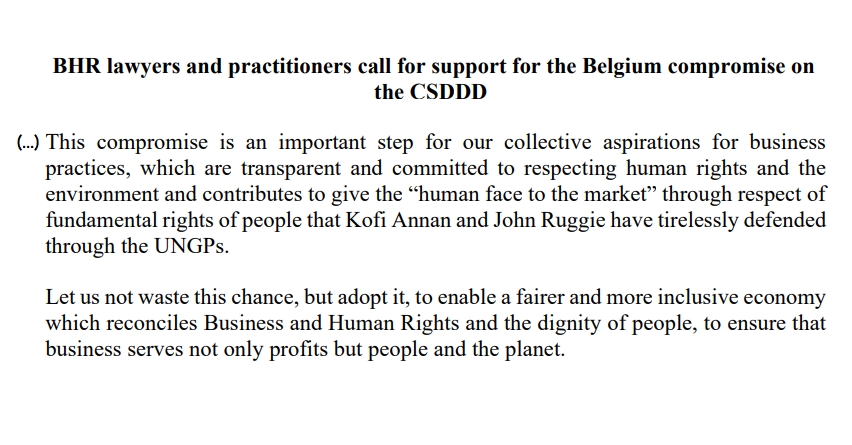
We are Business and Human Rights (BHR) lawyers and practitioners that work with companies, academia, NGOs and state institutions to implement human rights and environmental due diligence in order to foster responsible and sustainable business practices that uphold respect for human rights and environmental standards throughout global value chains.
Stakeholders involved in this field and their representatives both in the European Union and beyond have repeatedly expressed a shared desire to formalize in a EU-level legislation the core elements of the United Nations Guiding Principles on Business and Human Rights (UNGPs)… A growing number of countries, both within the EU and beyond, have already taken steps to implement the UNGPs. Following in their footsteps, the Draft Directive on Corporate Sustainability Due Diligence (CSDDD) aims to require companies to respect human rights and environmental standards in their activities and in their value chain. In doing so, it will not only be a step towards alignment with international standards set out in the UNGPs and other international instruments, but it will also provide more legal certainty by resulting in a uniformized standard at the EU level rather than a patchwork of legislation with varying standards in the various Member States.
The current draft of the CSDDD covers both large EU companies and companies based outside the EU which are active in the EU market. As such, the CSDDD creates a harmonized set of rules for all large companies operating in the EU, providing a much needed global level playing field and upholding the protection of all internationally recognized human rights.
We have carefully examined the most recent compromise offered by the Belgian Presidency and call on all Member States to accept it. This call is despite the fact that the changes introduced in the last few weeks significantly reduce the scope of the applicability of the CSDDD.
Indeed, even though many important provisions protecting human rights and the environment have been diluted, the current compromise for CSDDD still provides for Human Rights and Environmental Due Diligence (HREDD) across the supply chain, climate transition, rightsholder engagement and redress. It is feasible for companies, as it creates an obligation of means and implementable obligations, allowing companies to prioritize through a risk-based approach. The compromise also avoids overburdening SMEs as it does not cover them and ensures special support and protections for SME suppliers. We hope that those businesses for whom HREDD is still quite a new topic might welcome this compromise as workable.
We understand that in a political organization as complex and important as the EU, especially in the difficult context worldwide, a compromise is a necessity and politics will always be the art of the possible.
Therefore, we believe the Belgian proposal to be a necessary compromise. In this perspective, we call on all EU Member States to support the latest CSDDD compromise made by the Belgian Presidency of the EU and, for this, we call on BHR experts from the EU and from around the world to signal their support for this version…
[full statement and signatories attached]

utworzone przez Beata Faracik | mar 11, 2024 | News, Uncategorized, Wystąpienia eksperckie
7 marca 2024 r. mieliśmy przyjemność podzielić się naszą wiedzą i praktycznym doświadczeniem dot. zaangażowania i dialogu z interesariuszami w kontekście HRDD podczas pierwszej tak kompleksowej konferencji nt. praw człowieka w biznesie na Łotwie jaką było wydarzenie zorganizowane przez Biuro Ombudsmana Republiki Łotwy, Riga Graduate School of Law oraz Nordic Council of Ministers’ Office in Latvia. PIHRB był reprezentowany przez prezeskę, ekspertkę PIHRB – Beatę Faracik.
Konferencja pt. „Human rights as the new fuel for business” zgromadziła przedstawicieli różnych grup interesariuszy, ale z satysfakcją odnotowujemy fakt, że dominowali przedstawiciele biznesu oraz firm konsultingowych, które – jak można wnioskować z pytań z sali – coraz częściej dostają zapytania od firm odnośnie HRDD oraz wdrażania różnych regulacji z zakresu Zielonego Ładu.
Więcej o konferencji można przeczytać na stronie jej poświęconej: tutaj.
Program konferencji tutaj.
————————————————————————-
Informacje nt. konferencji w języku angielskim:
Latvian companies can increasingly find human rights clauses in their cooperation agreements. Various human rights requirements can often be found in the codes of conduct for business partners. Furthermore, companies are also publicly affirming their commitment to respect human rights in line with the UN Guiding Principles on Business and Human Rights. But what does it mean in practice?
To know where a company’s human rights risks lie and be able to address them appropriately, a company should conduct human rights due diligence. Soon, some Latvian companies will have to report publicly on their due diligence processes. It will be required under the forthcoming Sustainability Information Disclosure Law. In some European countries, local laws make it a legal obligation for some companies to conduct due diligence on human rights (e.g., France, Germany, and Norway). Such a requirement is also expected at a European Union level when the Corporate Sustainability Due Diligence Directive is adopted.
The conference “Human Rights as the New Fuel for Business” will focus on exploring what is human rights due diligence. It will allow representatives of companies and other stakeholders to:
• understand the difference between duties of states and responsibilities of businesses with respect to human rights;
• learn how businesses can identify their human rights risks;
• explore what practical steps companies can take to prevent or mitigate their negative impacts on human rights;
• recognise the importance of meaningful stakeholder engagement;
• get practical guidance from experienced foreign experts who have helped companies integrate due diligence into their operations.
Human rights due diligence is a continuous process explained in the UNGPs and the OECD Guidelines that allows companies to identify, prevent, mitigate and account for how they address their negative impacts on human rights.
Full conference programme available here.
The conference was organised by the Ombudsman’s Office of the Republic of Latvia, Riga Graduate School of Law and Nordic Council of Ministers’ Office in Latvia.

utworzone przez Beata Faracik | lut 28, 2024 | News, Uncategorized, Wystąpienia eksperckie
Earlier today, 28 February 2024, President of the Board of PIHRB took part in a consultation meeting between The European Bank for Reconstruction and Development (EBRD) and selected group of civil society and NGO representatives to discuss the EBRD Country Strategy for Poland. The meeting was held at the EBRD Warsaw Resident Office in central Warsaw.
EBRD prepares country strategies for each of its countries of operations, which serve as a guide for the Bank’s investments and policy work in the country for the next three-five years. Currently, the EBRD is reviewing its Country Strategy for Poland, and invites members of the public, civil society organisations, its clients, partners and all interested stakeholders to contribute to the development of the strategy.
EBRD, as part of its commitment to democracy, sustainable development, transparency and inclusion, strongly encourage CSOs to take part in this strategy review process. The consultation meetings are good opportunities for CSOs to provide their inputs and exchange views with EBRD representatives. During the meeting, senior EBRD management members represent the Bank and provide an outline of recent developments, transition challenges and the Bank’s operational priorities for the new strategy period.
To find out more about the EBRD’s activities in Poland, please visit: https://www.ebrd.com/poland.html
AGENDA — PDF
